
Before we begin this topic, I strongly encourage you to read “What the Toxin?!” prior to reading this page. I assure you it will help give you familiarity and a basic understanding to better understand this topic. I will not be covering details of the toxins in this topic.
In our topic, “What the Toxin?!,” we covered the vastness of the 2 major categories of toxins commonly found in our non-food products (the cumulative part). This topic discusses the types of products those toxins can be found and shows how quickly our exposure accumulates and begins to show the degree of which we are exposed (the accumulative part). Again, this may be the most triggering and upsetting part of our journey together. Hopefully, you have already seen just how many are talking about this issue online through social media and internet searches. Before we begin, let’s cover housekeeping again.
Housekeeping:
Before we get too involved, I want to cover some housekeeping about this page and how I write about these types of topics. Please understand this is a learning curve for many. I have comments turned off on these main pages to keep the information as clear as possible. The information gets technical and there is a lot of it. It is impossible to cover everything, so I will only address the major parts of the topic to help give you a more clear and better understanding of the topic.
Instead of formally citing the information I’ve written about, you will see blue highlighted text within the paragraphs that when clicked, will take you to a credible source to support my argument. Most, if not all, of my sources are directly from U.S. and global government agencies. This topic is not a secret, but it’s not easy to read or sort through. Many other bloggers and websites do their best to explain this information, but my purpose is to use my knowledge and experience I have gained from my professional and academic career to help you understand the importance of this issue in ways that are clear, credible, and educational.
Some of the issues regarding these topics are indeed political. However, it is not my intent to argue who is right and who is wrong. As far as I’m concerned, our government and big business, in general, have some explaining to do which I will address later and open for comment.
Please understand the nature of these topics may be triggering for you. It certainly was for my family and me. I understand the fear, guilt, regret, and outrage you may experience as you learn through this journey with me. Change is uncomfortable and many times, so is the truth. Be patient with yourself, others and me as you process this information. I firmly believe you will have a better understanding to help you make better decisions through this journey. So, stick with me and let’s get started.
My Experience
Take a look at these two photos closely. Many of these products should look familiar to you. All of these products come in contact with our skin and are worn, used and accessed daily. What do you believe they have in common?
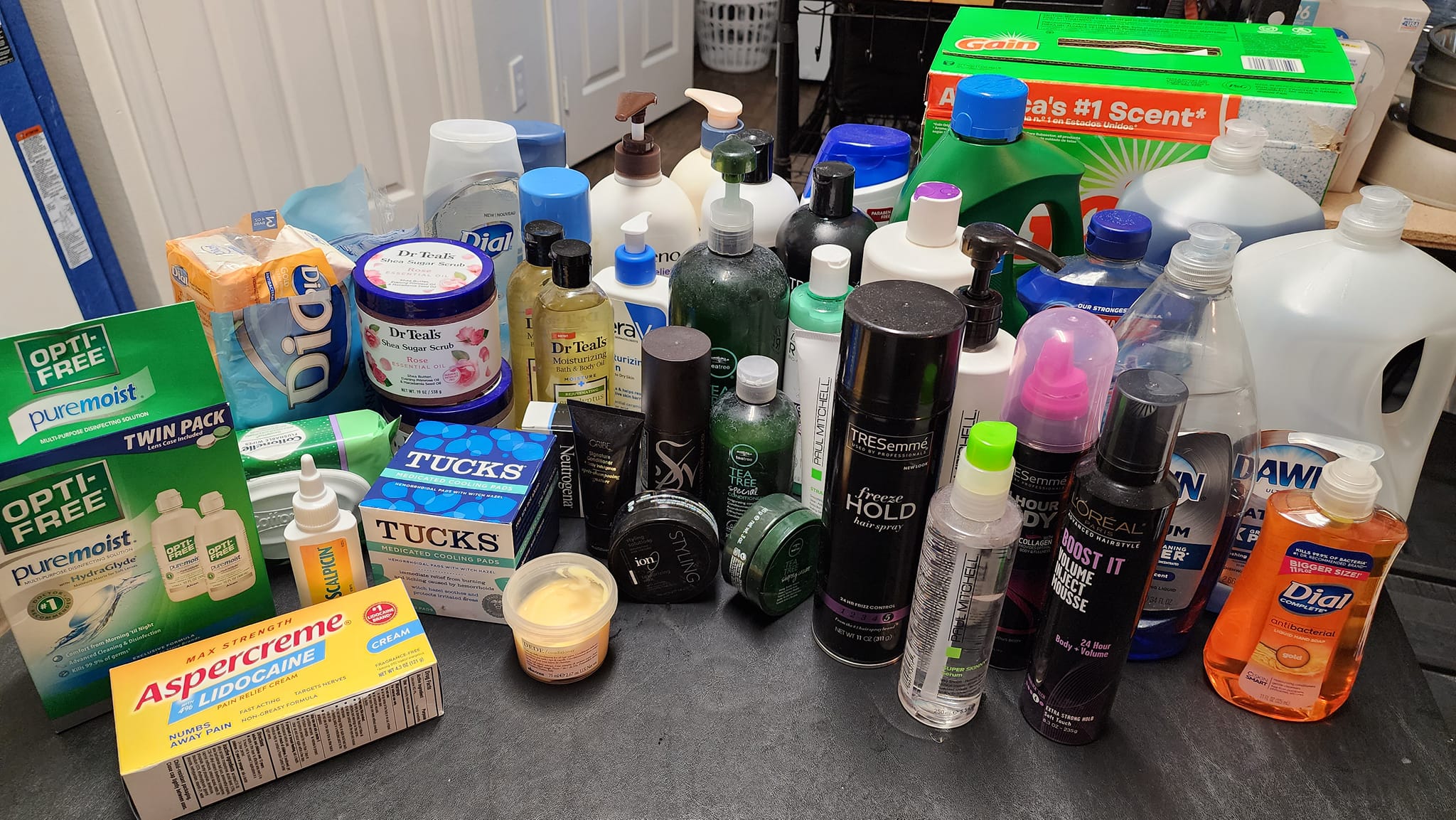
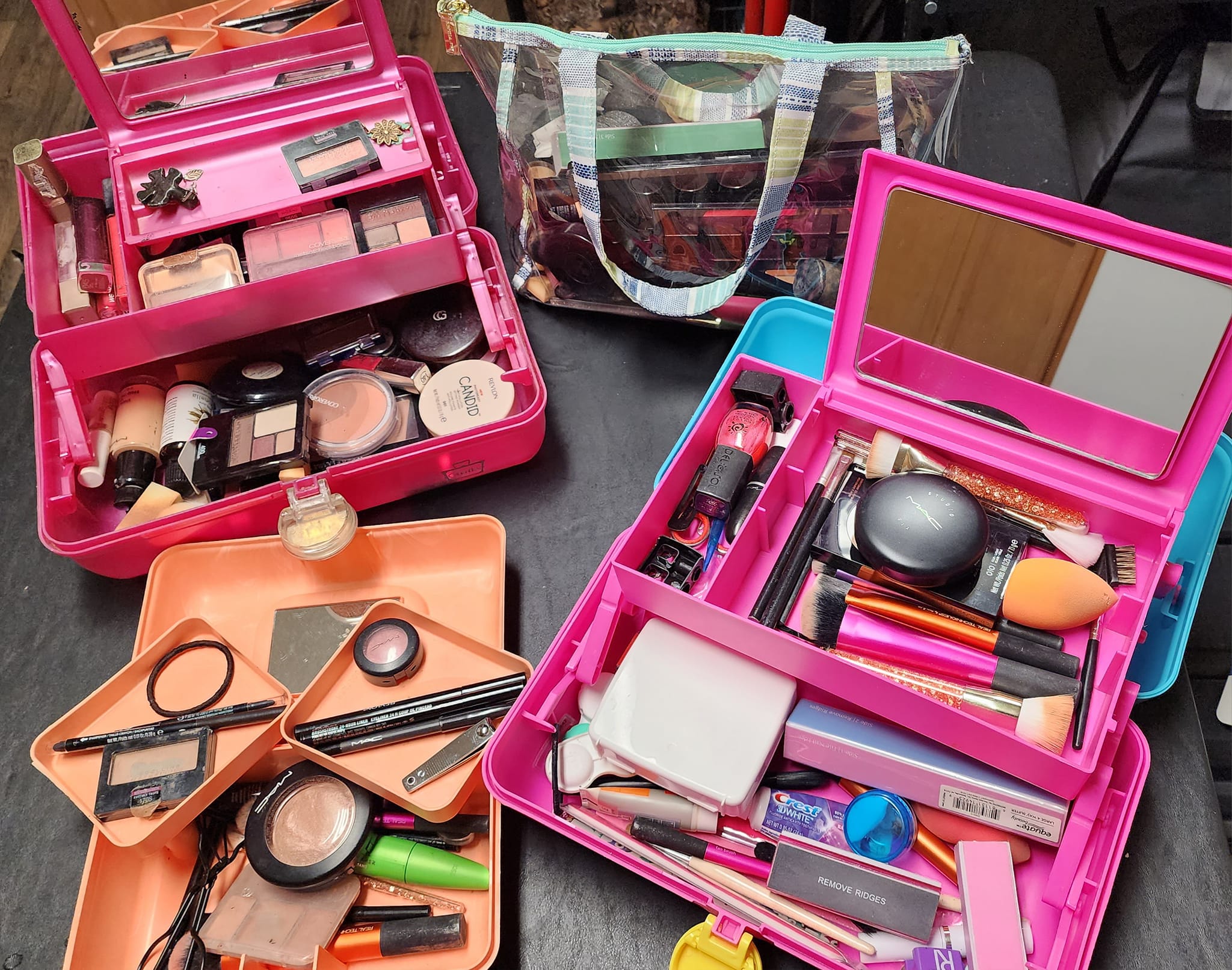
Note: I’m not here to disparage any product or company. These concerns are a “bigger picture” problem.
These were my personally owned products. What’s not shown are the pet shampoos, etc. I had already thrown away. They were your typical drugstore type brands you can find at almost any big box store. I read every ingredient label, and visited their website or online retailer to find the ingredients if the container didn’t have one. Some didn’t have anything available.
My household is probably pretty similar to yours. Some things were bought recently, some are up to several years old, and some aren’t even opened yet because we like to keep it on hand or extras just in case. We try to buy bulk to help save money in the long run on some products we uses a lot, too. I try to be conscious about lower quality items while also realizing expensive items aren’t always the best. I usually buy products based on performance, recommendation, need, and yes, marketing because it’s suppose to be healthier, more natural, dermatologist approved, etc.
My husband and I have very sensitive skin. I have chemical/medicinal allergies since an infant that usually presents as allergic contact dermatitis. My parents are also suffering the same at an increasing rate over the years as they near 80 years old. All of our dogs have sensitive skin as well, all 3 of them. We’ve all thought it curious, but haven’t thought too much about any link… until now. Is it a coincidence?
What Products Contain Toxins?
Most typical products on the market that I have seen online and in-store all contain some of the toxins. They can been the budget brands to the professional brands. These toxins are more commonly used than one would believe. What’s even more important is what I call “stacking” chemicals.
Toxin Stacking
To me, “stacking” is when you’re looking at an ingredient list on a product and you see multiple toxins listed. Some of these toxins may be listed next to each other, or it’s the same type of chemical listed throughout. Examples from top brands:
High-End Shampoo: (“Stacked” with formaldehyde/releasers and 1,4 dioxane chemicals.)
Aqua (Water, Eau), Disodium Cocoamphodiacetate, Sodium Laureth Sulfate, Urea, Magnesium Sulfate, Sodium Chloride, Sodium Thiosulfate, Glycine, Leucine, Tyrosine, Cysteine, Symphytum Officinale Leaf Extract, Plantago Major Leaf Extract, Hydrolyzed Wheat Protein, Sulfated Castor Oil, Bisamino PEG/PPG-41/3 Aminoethyl PG-Propyl Dimethicone, Disodium EDTA, Disodium EDTA-Copper, Magnesium Carbonate, PEG-12 Dimethicone, Tetrasodium EDTA, Trisodium HEDTA, Sodium Glycolate, Sodium Hydroxide, Phenoxyethanol, Methylchloroiso-thiazolinone, Methylisothiazolinone, Magnesium Chloride, Magnesium Nitrate, Parfum (Fragrance), Limonene. [P13_3(Z)]
Budget-Friendly Shampoo (Men): (“Stacked” with formaldehyde/releasers and1,4 dioxane chemicals.)
Water (Aqua), Sodium Laureth Sulfate, Cocamidopropyl Betaine, Sodium Chloride, Dimethiconol, Fragrance (Parfum), Carbomer, Glycol Distearate, Citric Acid, Guar Hydroxypropyltrimonium Chloride, Tea-Dodecylbenzenesulfonate, Tetrasodium Edta, Dmdm Hydantoin, Propylene Glycol, Ppg-9, Panthenol, Methylchloroisothiazolinone, Methylisothiazolinone, Blue 1 (Ci 42090), Red 33 (Ci 17200).
The EPA and FDA state what safe levels each toxin can be used in products as a percentage of total product volume such as .01% ppm (parts per million). I have questions about these regulations, which I have yet to find an answer: If multiple chemicals that produce/contain the same toxin are used, is the percentage per ingredient or is it a sum of all same-toxin chemicals within the product? If it is “per ingredient used,” what is being done to regulate the sum within the finished product?
Types of Products
These are the general types of product that most likely contain the toxins. You’ll want to read ingredient lists on the back of each product and/or its website listing for specifics. If you can’t find an ingredient list anywhere, don’t use it and don’t buy it! This is not an exhaustive list. It’s for general information to give you a broad idea of where to look for these toxins.
Note on “soaps”: Natural, Traditional Soap is not made with chemicals/toxins. What we commonly call “soap” are actually detergents such as our shampoo, conditioners, etc. Some, like our bar “soap” such as Dial, Neutrogena, Zest, and Dove are actually hybrid-“soaps.” They may be part soap and part detergent which will also contain these toxins. The term Soap and traditional soap are not regulated by the FDA, but they do regulate detergents. You’ll find some of these terms on detergent products: “body wash,” “cleaning liquid,” “washing liquid,” “detergent,” “shampoo,” “conditioner,” etc..
The following products are indiscriminate to gender, age, skin type, hair type, ethnicity, and health when including toxins. The toxins are found in all types of those products including ones marketed as “natural,” “free from,” “healthy,” “defying,” “safe,” “meets [any] agency standards” (with or without certified logo), “sensitive skin,” etc..
Bathroom
- Nail polish
- Nail glue
- Nail hardeners
- Eyelash glue
- Hair gel
- Hair-smoothing products
- Hair texturizers/styling products
- Body wash/”soap”
- Color cosmetics
- Soaps (non-traditional/natural)
- Face cleaners (also, any skin type formula)
- Skin care products
- Makeup (all product types)
- Shampoos
- Shaving creams
- Exfoliants
- Moisturizers/oils
- Lotions
- Deodorants
- Multipurpose Contact Lens Solution (all types)
- Wipes (all types)
- OTC topical medicated creams, salves, balms, liquids
Kitchen
- Dish washing liquid (for the sink)
- Dishwashing detergent (for the washer)
- Dish finishing powder/liquid
- Dishwashing boosters powder/liquid
- Sanitizers powder/liquid
- Liquid hand soap (actually detergent)
- Bar soap (detergent or hybrid)
- Cleaning products
Pets
- Shampoo (all types)
- Conditioner (all types)
- Sprays (all types)
- Fragrances (all types)
Laundry
- Laundry detergent (powder/liquid)
- Fabric softener (liquid/sheets)
- Sanitizers
- Fragrance additives (beads/liquid/sheets)
- Static/Ironing sprays
- Prewash sprays (ex. Shout)
Baby/Children
- Baby shampoo
- Body soap/wash
- Baby wipes
- Baby/toddler laundry detergent
- Sanitizers
What are the next steps?
By now, you should have a better understanding about how intrusive these toxins are and how much we are exposed to them practically all day, everyday – the accumulative part. Now, is the time to learn about whole, natural ingredients you can use so that you may make more informed decisions about topical products you choose for yourself and your family.
As for me and my family, we are changing our lifestyle to reduce our exposure. Here are the products we’ve thrown away and replaced with reduced toxin, more natural and/or all natural products.
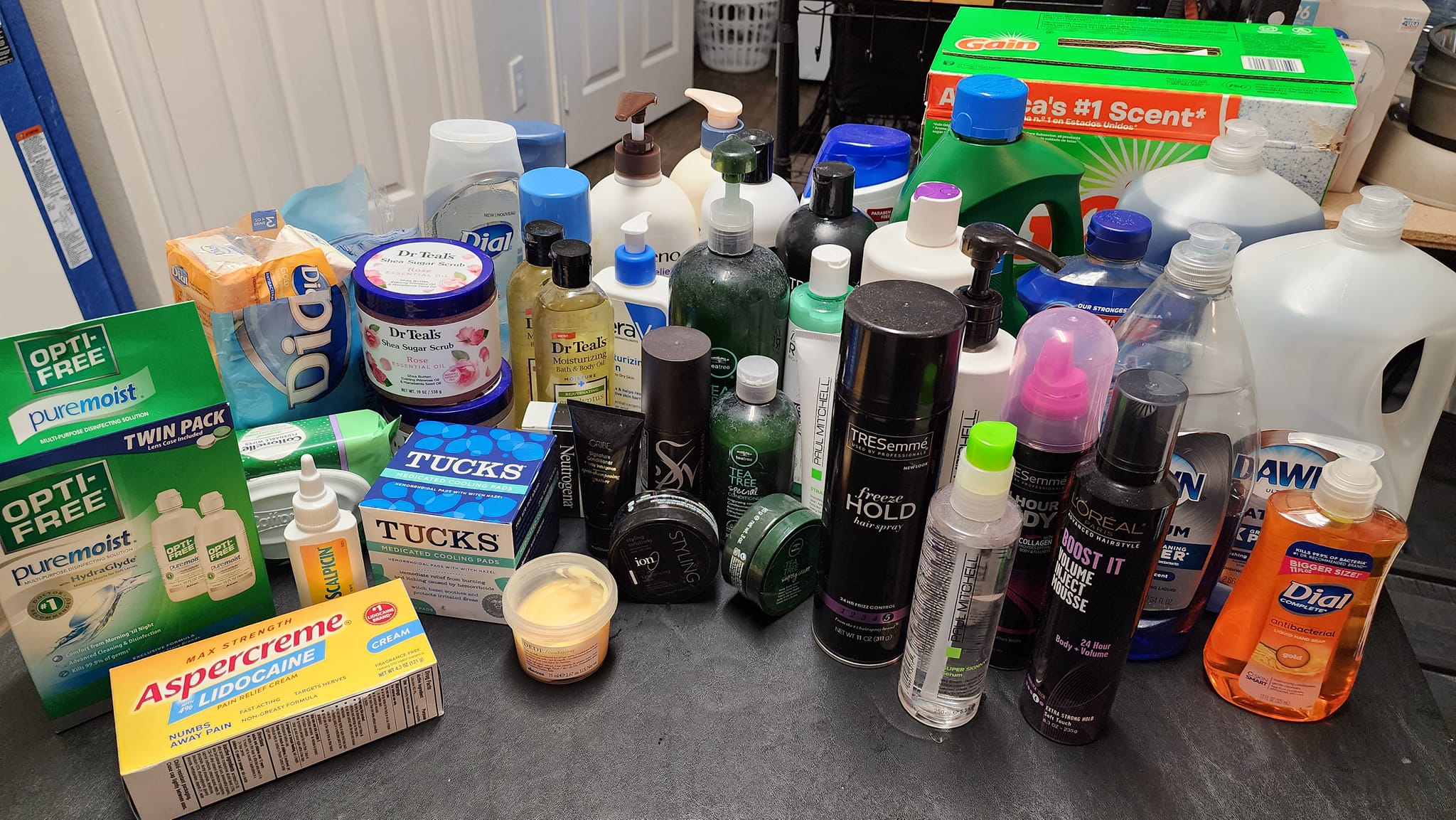
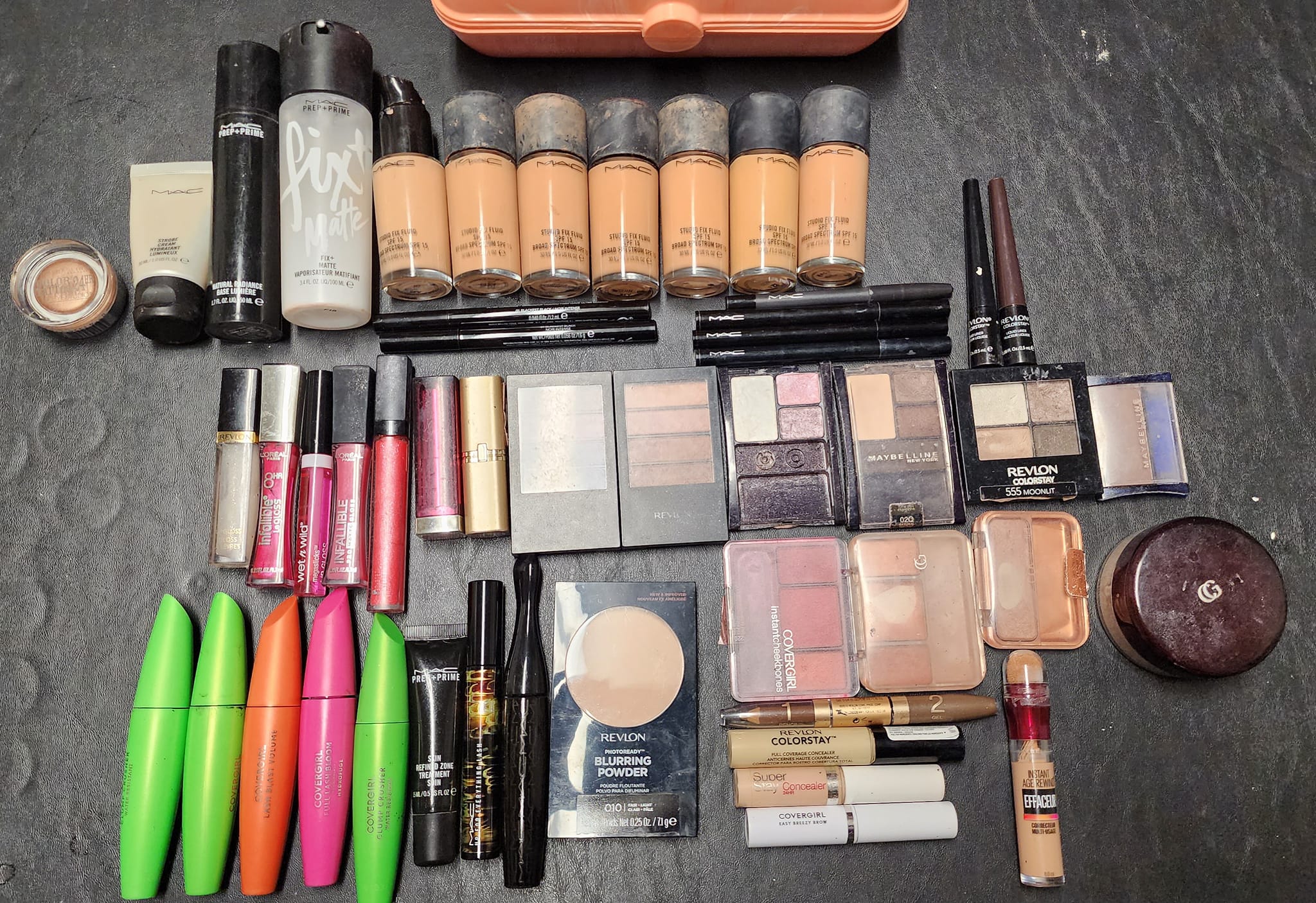
Explore posts about Natural Products
If you want to learn about what’s lurking in our processed food (warning: some toxins are the same), head over to the Truth About Food page to get started.
 Living Clean Naturally
You must be logged in to post a comment.