

The Lord’s Food:
The following segment is the “Lord’s Food” chapter in my book, For God So Loved The World: The Way, The Truth, The Life.
It may be assumed that we can eat all things as God instructed in scripture according to Genesis 1:29-30 which states,
“And God said, Behold I have given to you every seed-bearing herb sowing seed which is upon all the earth, and every tree which has in itself the fruit of seed that is sown, to you it shall be for food. And to all the wild beasts of the earth, and to all the flying creatures of heaven, and to every reptile creeping on the earth, which has in itself the breath of life, even every green plant for food; and it was so.”
However, there is more to this story in the Book of Genesis. In chapter three, the serpent temps the woman to eat of the only thing God commanded Adam and his wife not to eat, the Tree of Life. When they ate of the tree, both good and evil became known to them, like the gods. God then shows his first consequences of breaking his commandment in Genesis 3:15-25,
“And the Lord God said to the serpent, Because thou hast done this thou art cursed above all cattle and all the brutes of the earth, on thy breast and belly thou shalt go, and thou shalt eat earth all the days of thy life. And I will put enmity between thee and the woman and between thy seed and her seed, he shall watch against thy head, and thou shalt watch against his heel. And to the woman he said, I will greatly multiply thy pains and thy groanings; in pain thou shalt bring forth children, and thy submission shall be to thy husband, and he shall rule over thee. And to Adam he said, Because thou hast hearkened to the voice of thy wife, and eaten of the tree concerning which I charged thee of it only not to eat—of that thou hast eaten, cursed is the ground in thy labours, in pain shalt thou eat of it all the days of thy life. Thorns and thistles shall it bring forth to thee, and thou shalt eat the herb of the field. In the sweat of thy face shalt thou eat thy bread until thou return to the earth out of which thou wast taken, for earth thou art and to earth thou shalt return. And Adam called the name of his wife Life, because she was the mother of all living. And the Lord God made for Adam and his wife garments of skin, and clothed them.
And God said, Behold, Adam is become as one of us, to know good and evil, and now lest at any time he stretch forth his hand, and take of the tree of life and eat, and so he shall live forever— So the Lord God sent him forth out of the garden of Delight to cultivate the ground out of which he was taken. And he cast out Adam and caused him to dwell over against the garden of Delight, and stationed the cherubs and the fiery sword that turns about to keep the way of the tree of life.”
After this, life continued on until the time we get to Noah. A generalized list for Noah was instructed in chapter 6:19-23,
“And I will establish my covenant with thee, and thou shalt enter into the ark, and thy sons and thy wife, and thy sons’ wives with thee. And of all cattle and of all reptiles and of all wild beasts, even of all flesh, thou shalt bring by pairs of all, into the ark, that thou mayest feed them with thyself: male and female they shall be. Of all winged birds after their kind, and of all cattle after their kind, and of all reptiles creeping upon the earth after their kind, pairs of all shall come in to thee, male and female to be fed with thee.
And thou shalt take to thyself of all kinds of food which ye eat, and thou shalt gather them to thyself, and it shall be for thee and them to eat. And Noe did all things whatever the Lord God commanded him, so did he.”
Then we learn of the specific clean and unclean separation of beasts in Genesis 7:1-3 which states,
“And the Lord God said to Noe, Enter thou and all thy family into the ark, for thee have I seen righteous before me in this generation. And of the clean cattle take in to thee sevens, male and female, and of the unclean cattle pairs male and female. And of clean flying creatures of the sky sevens, male and female, and of all unclean flying creatures pairs, male and female, to maintain seed on all the earth.”
If one were to use Genesis 1:29-30 as an argument to eat anything God created, one cannot ignore God’s commandments over food in the rest of the Old Testament. Let us look at the New Testament. It is also argued that Jesus declared all foods clean by using the passage, Mark 7:14-23,
“And having called near all the multitude, he said to them, `Hearken to me, ye all, and understand; there is nothing from without the man entering into him that is able to defile him, but the things coming out from him, those are the things defiling the man. If any hath ears to hear — let him hear.’ And when he entered into a house from the multitude, his disciples were questioning him about the simile, and he saith to them, `So also ye are without understanding! Do ye not perceive that nothing from without entering into the man is able to defile him? because it doth not enter into his heart, but into the belly, and into the drain it doth go out, purifying all the meats.’
And he said — `That which is coming out from the man, that doth defile the man; for from within, out of the heart of men, the evil reasonings do come forth, adulteries, whoredoms, murders, thefts, covetous desires, wickedness, deceit, arrogance, an evil eye, evil speaking, pride, foolishness; all these evils do come forth from within, and they defile the man.’”
If we take a closer look at the entire chapter 7 in the Book of Mark, we see the argument is actually over the washing of hands before eating bread. Mark 7:1-5,
“And gathered together unto him are the Pharisees, and certain of the scribes, having come from Jerusalem, and having seen certain of his disciples with defiled hands — that is, unwashed — eating bread, they found fault; for the Pharisees, and all the Jews, if they do not wash the hands to the wrist, do not eat, holding the tradition of the elders, and, [coming] from the market-place, if they do not baptize themselves, they do not eat; and many other things there are that they received to hold, baptisms of cups, and pots, and brazen vessels, and couches.
Then question him do the Pharisees and the scribes, `Wherefore do thy disciples not walk according to the tradition of the elders, but with unwashed hands do eat the bread?’”
Matthew 15 also supports Mark 7, and includes the question Jesus asked in response to the Pharisees question. Matthew 15:2-3,
“Wherefore do thy disciples transgress the tradition of the elders? for they do not wash their hands when they may eat bread.’ And he answering said to them, `Wherefore also do ye transgress the command of God because of your tradition?”
Jesus was demonstrating and arguing the hypocrisy of the Pharisees and scribes, not altering God’s commandments. In the New Testament, food was automatically assumed to be the things determined to be clean by God in his commandments. Jesus was simply arguing that not washing hands before eating (a tradition of man) would not make what God considers clean to be unclean, and therefore, permitted under the Law.
Let us back up to what Jesus said in Matthew 5:17-20,
“`Do not suppose that I came to throw down the law or the prophets — I did not come to throw down, but to fulfill; for, verily I say to you, till that the heaven and the earth may pass away, one iota or one tittle may not pass away from the law, till that all may come to pass. `Whoever therefore may loose one of these commands — the least — and may teach men so, least he shall be called in the reign of the heavens, but whoever may do and may teach [them], he shall be called great in the reign of the heavens. `For I say to you, that if your righteousness may not abound above that of the scribes and Pharisees, ye may not enter to the reign of the heavens.”
One major issue both God and Jesus had was hypocrisy among the people, the pharisees, and of the rulers when it came to the Word of God. It does not make sense for Jesus to alter any of God’s commandments, including the commandments over clean and unclean food.
The sole issue with Jesus in both the Books of Matthew and Mark was how the unwashed, therefore unclean, hands were found to be a fault by the Pharisees, but the breaking of the Law of God was not. That was Jesus’s whole point of the argument. Had Jesus actually altered the law, he would also be a hypocrite, not fulfilled the Law, and would not be the Messiah.
So, let us return to chapter 11 of the Book of Leviticus where we find God’s commandments about food. This chapter seems to describe clean and unclean foods in a very vague way, but it is very specific which can make it difficult to determine what we can and cannot eat beyond what is actually called by name. We can also look at Deuteronomy 14 for more named beasts.
Now, we can begin to identify each beast in scripture, after some careful research, to define each food category and the name of each beast to better apply God’s food laws to our lives.
This chapter has labeled each category according to scripture as:
- Earth – clean and unclean
- Waters – clean and unclean
- Birds – clean and unclean
- Reptiles – clean and unclean
Remember: Clean means we can eat it, and unclean means we cannot eat it. Leviticus also has instructions about how to handle the unclean, dead, and contaminated items.
Future Reference: Food always means clean food items in scripture.
GENERAL FOOD COMMANDMENTS:
Leviticus, Numbers, Deuteronomy
Do not eat fat of oxen, sheep, or goats
- Fats of such animals that have died of themselves or killed by beasts, may only be used for work.
- Perpetual statute (Exodus 3:17)
Do not eat blood in all habitations (also Lev – Ch 17)
- Not of beasts nor birds
- “But flesh with blood of life ye shall not eat (Genesis 9:4).”
- Perpetual statute (Exodus 3:17)
Hunting
- Beast, bird, which is eaten
- Pour out the blood and cover it in the dust
Soul that eats things died of itself or taken of beasts
- Wash his garments
- Bathe himself in water
- Unclean until evening
- If not done, he bears his iniquity
Clean and Unclean Food
- Do not eat any abominable thing (Deuteronomy 14:3)
- Eat nothing that dies of itself (Deuteronomy 14:21)
- Give it to the sojourner, or
- Sell it to the stranger among you
- Do not defile your soul with any beast that has been separated from you by reason of uncleanness
- Do not boil a lamb in its mother’s milk (Deuteronomy 14:21)
- Meaning: This is said to be a ritualistic practice of seething prior to sacrifice in pagan traditions. iii.
- But thou shalt kill according to all thy desire, and shalt eat flesh according to the blessing of the Lord thy God, which he has given thee in every city; the unclean that is within thee and the clean shall eat it on equal terms, as the doe or the stag.
Do not let your cattle gender with a different kind
Do not take the young or eggs of a bird’s nest with their mother.
- Leave the mother when taking the young
Harvesting land (Leviticus 19)
- 6 years sow the field
- 6 years prune the vine
- Gather its fruits
- 7th year is a sabbath rest for the land
- No sowing or pruning
- Do not gather spontaneous produce
- Do not fully gather the grapes
- Food available this year for you, servants, hirelings, and stranger that abides with you
- Fruit is for your cattle and wild beasts
- And when thou shalt have reaped corn in thy field, and shalt have forgotten a sheaf in thy field, thou shalt not return to take it; it shall be for the stranger, and the orphan, and the widow, that the Lord thy God may bless thee in all the works of thy hands. (Deuteronomy 24:21)
- And if thou shouldest gather thine olives, thou shalt not return to collect the remainder; it shall be for the stranger, and the fatherless, and the widow
- And whenever thou shalt gather the grapes of thy vineyard, thou shalt not glean what thou hast left; it shall be for the stranger, and the orphan, and the widow:
- And if thou shouldest go into the corn field of thy neighbor, then thou mayest gather the ears with thy hands; but thou shalt not put the sickle to thy neighbor’s corn. (Deuteronomy 24:1)
Do not sow your vineyard with diverse seed
- And if thou shouldest go into the vineyard of thy neighbor, thou shalt eat grapes sufficient to satisfy thy desire; but thou mayest not put them into a vessel.
Plant a fruit tree in the land the Lord gives you
- Purges away its uncleanness
- Fruit for the first 3 years is unclean and shall not be eaten
- All of its fruit is holy in the 4th year, subject of praise to the Lord
- Eat the fruit in the 5th year, its produce is an increase to you
Every seed-bearing herb sowing seed and fruit trees – you can eat
The botany definition of the word “herb” is any seed-bearing plant that does not have a woody stem and dies down to the ground after flowering. (not included in the book)
ON THE EARTH:
CLEAN:
Leviticus 11 – “Every beast parting the hoof and making divisions of two
claws and chews the cud,”
Deuteronomy 14 – “Every beast that divides the hoofs, and makes claws of
two divisions, and that chews the cud among beasts, these ye shall eat.”
NOTE: All 3 requirements must be met in the same animal. This list is not
all inclusive.
- Calf of the herd
- Beef, Veal
- Lamb of the sheep
- Kid of the goats
- Also wild goat
- Stag and Doe
- Deer
- Pygarg
- “a white-rumped ungulate (as an addax)”iv
- Possibly a type of Antelope
- Camelopard (Giraffe)
- Antelope
- Bison/Buffalo
- Caribou (Reindeer)
- Elk
- Gazelle
- Ibex
- Moose
- Oxen
UNCLEAN:
Leviticus 11 – “But of these ye shall not eat, of those that chew the cud, and
of those that part the hoofs, and divide claws;”
Deuteronomy 14 – “And these ye shall not eat of them that chew the cud,
and of those that divide the hoofs, and make distinct claws:”
NOTE: Scripture lists examples of unclean beasts. They typically meet the
requirements, but not all of them in the same animal. Therefore, all 3
requirements in the same animal are not met and considered unclean, and are
not to be eaten.
- Camel
- Chews the cud, does not divide the hoof
- Single padded foot with 2 toes
- Herbivore & used for transportation
- Swine (Pig/Hog/Bore)
- Divides the hoof, makes claws of the hoof, does not chew the cud
- Omnivore – grasses, fruit, insects, amphibians, reptiles, dead animals, etc.
- Do not touch their dead bodies
- Hare
- Does not chew the cud, and does not divide the hoof
- Has paws
- Rabbit
- Chews the cud, does not divide the hoof
- Has paws
- Llama (and Alpaca)
- Chews the cud, does not divide the hoof
- Feet like a camel – single pad with 2 toes
Additional List of Common Animals Not Found in Scripture:
Common Beasts with Paws (does not meet any of the requirements)
- Canines
- Equines
- Felines
- Rodents
- Armadillo
- Squirrel
- Skunk
- Opossum
- Primates
- Kangaroo
- Bears
- Mole
- Beaver
IN THE WATER:
CLEAN:
Leviticus 11 – “And these are what ye shall eat of all that are in the waters:
all things that have fins and scales in the waters, and in the seas, and in the
brooks, these ye shall eat.”
Deuteronomy 14 – “ And these ye shall eat of all that are in the water, ye
shall eat all that have fins and scales.”
NOTE: Scripture is self-explanatory with this category. Fish only and must
have both fins and scales. Fish identification guides are a useful tool.
Freshwater fish identification by the U.S. Fish and Wildlife Service and the Texas Parks and Wildlife Service
- Bass
- Crappie
- Sunfish
- All Sunfish, and Bluegill, and Warmouth
- Carp and Minnows
- Gar
- Herring
- Pupfish
- Redfish
- Salmon
- Suckers
- Bigmouth buffalo, black buffalo, Smallmouth buffalo
- Trout
- Tilapia
Saltwater fish identification by fish-identification.com
- Billfish
- Includes Marlin, Sailfish and Spearfish
- CAUTION: Swordfish is in the Billfish family. However, it
- loses its scales when it reaches adulthood.
- Drum Fish
- Grouper
- Grunt
- Jacks
- Mackerel
- Includes Wahoo and Cero
- Pompano
- Includes Lookdown, Palometa and Permit
- Porgy
- Includes Sheepshead
- Reef fish
- Includes Spadefish, Triggerfish and Hogfish
- Snapper
- Includes Schoolmaster
- Snook
- Includes Common and Fat
- Tuna
- Includes Albacore, Bonito, Bigeye, Blackfin, KawaKawa, Little Tunny, Yellowfin
UNCLEAN:
Leviticus 11 – “And all things which have not fins or scales in the water, or
in the seas, and in the brooks, of all which the waters produce, and of every
soul living in the water, are an abomination; and they shall be abominations
to you.”
Deuteronomy 14 – “And all that have not fins and scales ye shall not eat;
they are unclean to you.”
Examples of unclean beasts in the water:
- Catfish
- Lobster
- Crawfish
- Oysters
- Mussels
- Clams
- Scallops
- Crab
- Shrimp
OF THE BIRDS:
CLEAN:
Leviticus 11 – Nothing is stated about clean birds.
Deuteronomy 14 – “Ye shall eat every clean bird.”
This section is interesting because it does not give the requirements for a bird
to be considered clean. We are only given what is considered unclean. So, by
using the specific list of bird God commanded not to eat, we can conclude
we can eat what we are not commanded to avoid.
However, after carefully researching the unclean list of the birds and cross-checking with the birds commonly eaten today, we are able to confirm whether a species is considered clean. Some of them are: (this portion of the section is not included in the book)
- Dove
- Chicken (Junglefowl)
- Turkey
- Duck
- Quail
UNCLEAN:
Leviticus 11 – “And these are the things which ye shall abhor of birds, and
they shall not be eaten, they are an abomination:”
Deuteronomy 14 – “Ye shall eat every clean bird. And these of them ye shall
not eat;”
- Eagle
- Eats small mammals, birds, reptiles, small livestock, dead animals, etc.
- Ossifrage
- Eats bones of dead animals, prefers bone and marrow from goats and sheep
- Sea-eagle
- Includes the Bald Eagle
- Eats fish
- Also eats small mammals, birds, dead animals, reptiles, amphibians, crustaceans, etc.
- Vulture
- Scavenger – eats dead animals
- Kite and the like to it
- Includes Marsh Harrier and Buzzard
- Scavenger – eats insects, rodents, and reptiles
- Sparrow

– translated to “house sparrow”
- sparrow (continued)
- Omnivores – also eat small lizards and frogs
- Owl
- Diet depends on species type
- Generally, eats small mammals to fish, bugs, reptiles, amphibians, etc.
- Seamew
- Also called Seagull, Common gull, Herring gull
- Eats fish and crustaceans
- Also eats smaller seabirds, other gulls, insects, etc.
- Heron
- Also called Egrets or Bitterns
- Eats fish, small mammals, reptiles, amphibians, and bugs
- Swan
- Also eats mollusks, small fish, and frogs
- Stork
- Carnivore – eats small mammals, reptiles, frogs, fish, etc.
- Cormorant
- Includes Shag
- Eats fish
- Also eats amphibians, crustaceans, and bugs
- Hawk, and its like
- Includes Raptors
- Eats a variety of other mammals
- Hoopoe
- Occasionally eats small reptiles and frogs
- Also chosen as the national bird of Israel in 2008
- Raven
- Eats small animals, other birds, fish, turtles, etc.
- Pelican
- Eats fish
- Also eats dead animals and invertebrates
- Diver and the like to it
- Also called a Loon
- Similar to Cormorant, Grebe
- A water bird
- Red-bill

– translates to “water hen” which is part of the Rail family of birds that are flightless ground birds. The Water Rail has a long reddish bill and is found along Northern Africa.
- Bat
- Also eat birds, frogs and lizards
- Some eat other bats and blood
REPTILES [CREEPING ANIMALS]:
Leviticus 11 – “And every one among all the wild beasts that moves upon
its fore feet, which goes on all four, is unclean to you; every one that touches
their dead bodies shall be unclean till evening.” “These are unclean to you of
all the reptiles which are on the earth; everyone who touches their carcasses
shall be unclean till evening.”
Deuteronomy 14 – does not mention a reptile or separate creeping animal
section.
NOTE: Upon further inspection the ancient [Koine] Greek word,

may possibly also translate to “creeping.” The animals listed are not always reptiles.
- Weasel
- Eats other small mammals
- Mouse
- Eats roots, stems, bugs, dead animals, etc.
- Lizard
- Eats leaves, fruit, insects, eggs, other lizards, small mammals, snakes, birds, and dead animals
- Ferret
- Eats mainly prairie dogs, small animals, etc.
- Chameleon
- Eats insects
- Also eats small birds and other lizards
- Evet
- A lizard, possibly one who likes to hide
- Possible similar lizard diet
- Newt
- Eats insects, worms, crustaceans, shrimp, slugs, snails, etc.
- Mole
- Likes to burrow underground
- Eats worms and insect larvae
The scripture is very clear about what food is considered clean and unclean. The more we rely on others to prepare our food (commercial store-bought, restaurant, family and friends), the less we know what is lurking in our food. The best way to avoid unclean foods and awkward questions about ingredients is to stick to known whole foods that are not processed in additional oils, fats, and seasonings when dinning away from home.
Let’s take a look at some examples of popular meals and cuisines that have unclean foods lurking in the ingredients, and some of the things we need to consider when choosing to consume them.
Let’s say you want a simple spaghetti with meat sauce meal with a salad.
- Is the meat made with pork (like Italian sausage)?
- Is the oil used animal fat or plant-based?
- Are the seeds in a salad Pine nuts? If so, they come from a woody tree that does not produce fruit.
- Does the salad dressing include gelatin, a common thickening agent? If so, the gelatin is typically made from the remains of swine (pork).
How about a perfectly smoked sausage?
- Is the meat beef or something other than swine?
- Is the casing other than swine intestine?
- Is there gelatin added to help keep the meat together?
What about something as innocent as ice cream?
- Is gelatin listed in the ingredients?
What about your favorite savory Asian dish?
- Did they use fish oil? If so, what kind?
- Did they use an oyster sauce?
- Are mushrooms included in the dish?
Take a look at your favorite Mexican dinner as well. You might find:
- Everything is cooked in lard – swine fat.
- Gelatin is commonly used as a thickening agent.
- Swine is a common food on the menu.
Looking at the food we consume from a Biblical perspective is definitely a lifestyle change that is very challenging. However, this is the point of scripture. God’s commandments are designed to help keep us healthier and safer. Many unclean foods can not only be contaminated with disease and bacteria, but also toxins, that are harmful and many times fatal to us. The Word of God has been given to us out of love, which is why it is repeated many times in scripture that the Word/Laws/Commandments is not burdensome.
We must consider the Big Picture between the products we use and the foods we consume when making our daily choices for our families and ourselves. When we realize how complicated man has made our lives and how simple God has made his commands, we can begin making the necessary changes to live cleaner and more naturally.
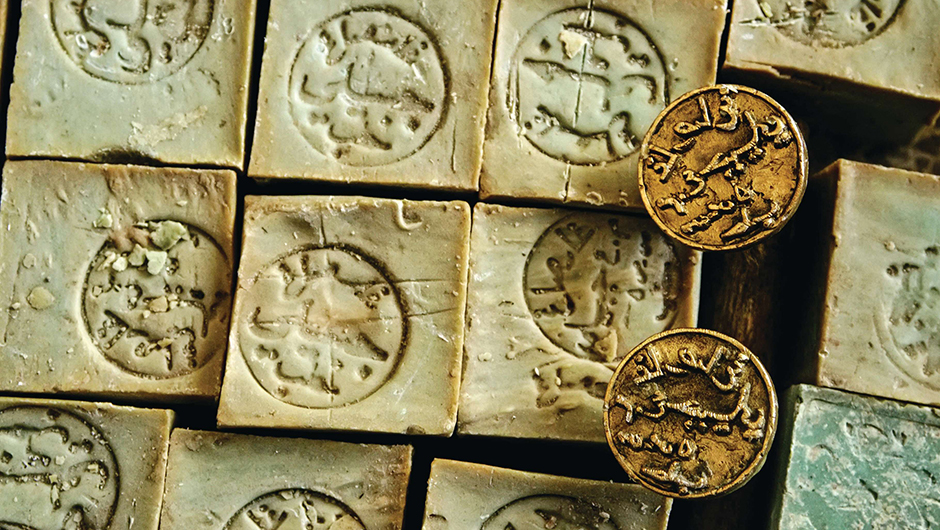
The Ancient & Biblical World of Soap
The BBC Science Focus article, Who Invented Soap?, dives into the ancient history of soapmaking known to the Babylonians and Egyptians.
Smith College published a short online article, Castile Olive Oil Soap, Spain, 2000 BCE, about the legend of Mount Sapo and the creation of soap. Natural Handcrafted Soap also posted a blog about this legend.
The American Cleaning Institute published an article, What is the history of soap? And where did cleaning come from?, about the history of soap and how detergents were created.
Biblical References of Soap:
Numbers 19:17-19 mentions the practice of making soap, “and they have taken for the unclean person of the ashes of the burning of the [cleansing], and he hath put upon it running water unto a vessel; and a clean person hath taken hyssop, and hath dipped [it] in water, and hath sprinkled on the tent, and on all the vessels, and on the persons who have been there, and on him who is coming against a bone, or against one pierced, or against the dead, or against a grave. And the clean hath sprinkled [it] on the unclean on the third day, and on the seventh day, and hath cleansed him on the seventh day, and he hath washed his garments, and hath bathed with water, and hath been clean in the evening.”
Job 9:30 references soap, “If I have washed myself with snow-water, And purified with soap my hands,…”
Jeremiah 2:22 references soap, “But though thou dost wash with nitre, And dost multiply to thyself soap, Marked is thine iniquity before Me, An affirmation of the Lord Jehovah.”
Malachi 3:2 references soap, “ And who is bearing the day of his coming? And who is standing in his appearing? For he [is] as fire of a refiner, And as soap of a fuller.”
 Living Clean Naturally
You must be logged in to post a comment.