
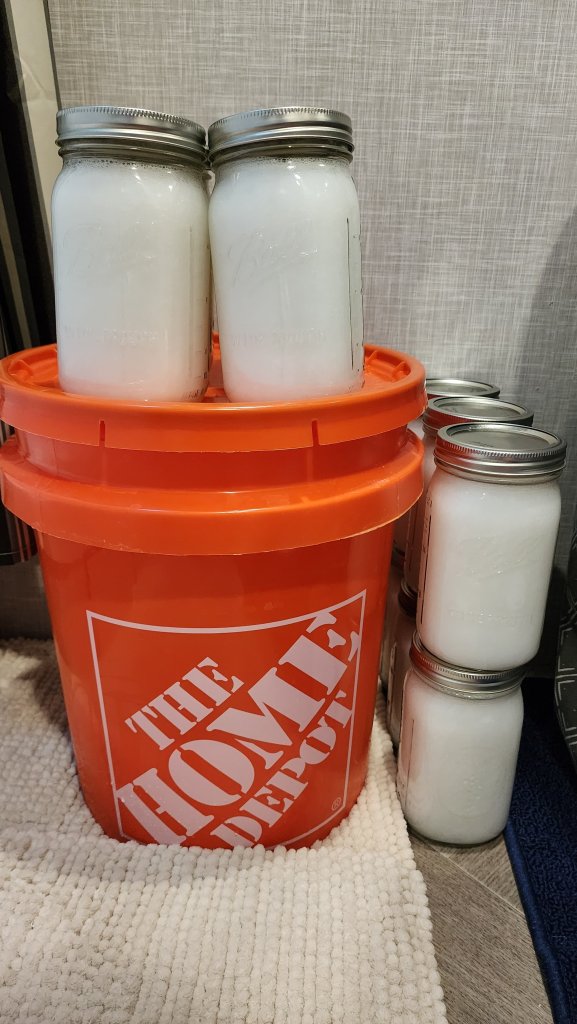
UPDATE: 10/20/2023
REVIEW: We finally completed our first 5 gallon batch with this popular recipe. There were a lot of things we liked, but there were too many important things we didn’t about this common DIY/ homemade recipe found on the internet.
1) The most important thing was the Zote brand laundry soap bar. I don’t like the fact that it contains a synthetic fragrance.
2) The solution didn’t clean as well as it should have. Our laundry smelled nice and appeared cleaner, but we believe it could have done a better job compared to our experiences cleaning with liquid castile soap.
After doing some more research (and math), it appears the formula commonly given (as seen below) is too diluted to effectively clean a normal load of laundry.
I believe it is a nice cheap way to experiment on a small scale or to make when the budget is very tight, but it’s not enough to clean laundry effectively for normal size loads with normal soiled laundry.
I have updated the title of this post and will create a new post with our own formula we created with the help of the ingredient manufacturer recommendations for use.
xxx
We decided to make our own borax-free laundry soap! It was really easy to make and very sudsy so far. We’re letting it gel some before we bottle it and try it out today! 🤩🙏
We quickly go through large detergent bottles, especially since we like to wash EVERYTHING pretty regularly. $50 a month on detergent is stupid, and it isn’t getting cheaper.
We’re also seeing a difference in our skin since pulling back on products containing toxic chemicals. This is one last thing to try!
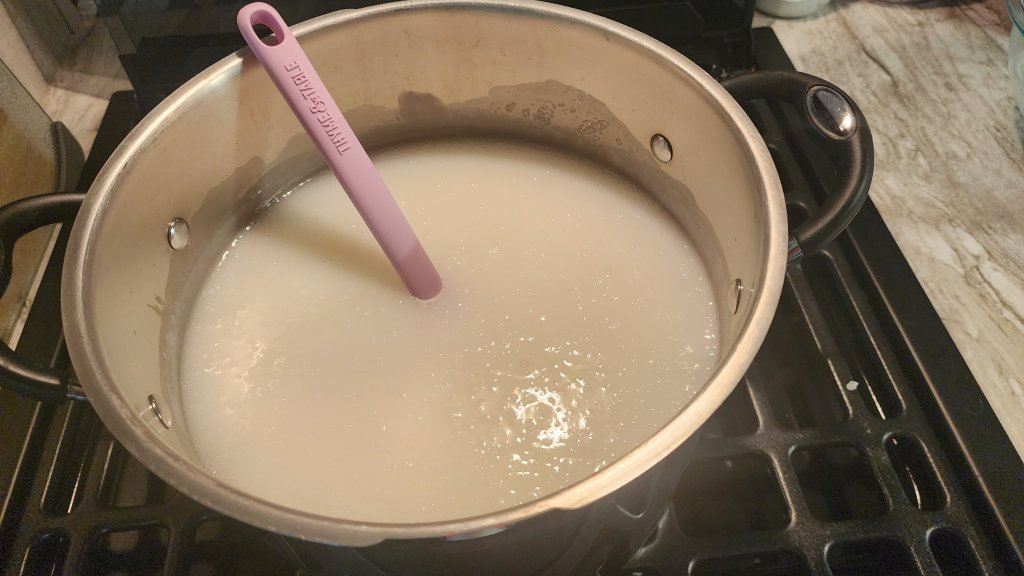
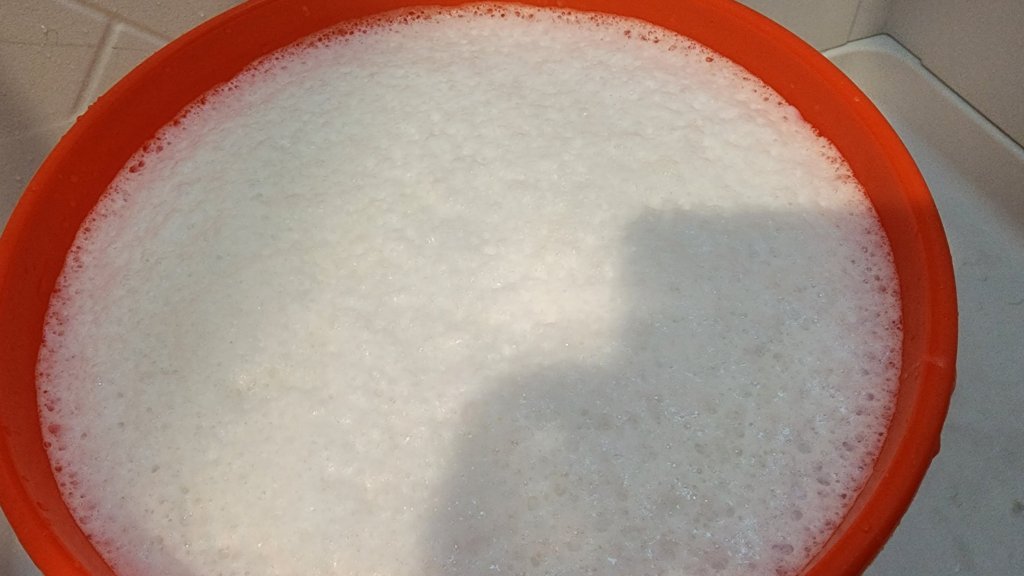
The reason we decided to try DIY laundry soap was because we saw just how quickly we were using the store-bought detergent at over $20 a bottle. We didn’t want to spend over $50 a month on laundry detergent alone. Powered detergent is also harder to find in our area, and we see how much more of the liquid we use compared to the powder. So, we took the plunge.
A lot of recipes call for Borax, but after some research about it, boron and boric acid, we forwent the Borox powder. Otherwise, the recipe is pretty standard. Here’s what you’ll need:
- Large pot
- Non-porus spoon
- Measuring cup
- 5 gallon bucket with lid
- Drill mixer attachment (optional) or any mixer that will help you speed mix the solution that won’t be used for food.
- Storage containers
- 4 oz sodium bicarbonate (aka: baking soda)
- 4 oz sodium carbonate (aka: soda ash or washing soda)
- 14 oz pure soap (we used Zote, but it has “fragrance” listed as an ingredient)
- Water
Start off by heating the large pot that’s filled about halfway with water on the stove at medium low heat. You do not want to boil the water. You just need it warm enough to dissolve the ingredients well.
While your water is heating, fill the 5 gallon bucket halfway with water, and shave or grate your bar of soap.
Then, add your soap shavings to the warm water in your pot on the stove. Stir continuously until all the soap has dissolved.
Next, add your baking soda and your washing soda. Keep stirring until all the ingredients are dissolved and well mixed. Your solution will begin to thicken.
Once the solution has thickened enough to coat your spoon and it’s no longer clinging to the sides of the pot, remove the pot from the stove and carefully pour the solution into the water in the 5 gallon bucket.
Begin stirring the bucket solution immediately. You will see the soap solution begin to harden in the cooler water. That’s normal. Keep stirring until all the solution is poured from the pot.
Then, power mix your solution in the 5 gallon bucket to make sure all ingredients are mixed well with the water in the bucket. When the solution begins to foam, add more water to the bucket until the solution level rises about 2-3 inches from the top rim of the bucket. Mix with your power mixer again until the solution and water are well combined.
Let the solution in the bucket stand unbothered 24-48 hours to cure. You can tell the solution has cured when the consistency is creamy and smooth all the way through to the bottom of the bucket.
Once the soap solution has cured, power mix the solution again until there is no more foam.
Then, transfer the solution into the container(s) you will use for wash and/or storage. You can also store the soap in the 5 gallon bucket by placing its lid on top and making sure the lid is secured. Store in a cool place.
How much to use:
The general recommendations are:
- 1/4 cup for normal load
- 1/2 cup for large load
- 1 cup for heavily soiled load
However, suds remove dirt. Use as much as you need to generate a reasonable amount of suds for your loads.
Please note that you’ll also go through a transition period where the soap will be breaking down the detergent buildup. So, it may take several washes before it’s easy to build suds. Be sure not to use a lot of soap because it won’t completely rinse from your clothes or machine – just like using too much detergent.
The amount of soap you use will definitely depend on your washing habits. Start off with a little and add as you need to without adding too much.
Cost comparison:
I’m over-the-moon happy with how our liquid laundry soap works! The cleanliness it provides and the affordability are incomparable (keep reading). 🤩👇
My husband and I like to keep our fabrics clean, so we do a lot of laundry pretty regularly, especially when we also have 2 pets at home. So, I feel this is really important for those of you who have children as well!
Aside from not containing toxic chemicals (only iffy one is fragrance in the Zote bar), this laundry soap is also extremely affordable even if you like everything sudsy!
This is actual laundry soap, not detergent. The powder and liquid stuff on the shelves are all detergents – typically made with questionable synthetic chemicals.
Also, this laundry soap works with all water temperatures just like any other traditional soap.
Our typical weekly laundry is 4 normal loads: white, darks, uniforms, and towels. This is our control wash week scenario.
We like a reasonable amount of suds in our wash cycles so we use as much detergent needed to achieve our sud requirement. Our detergent usage is 12 oz per load (2 full caps).
(NOTE: The box and the internet all say suds aren’t needed to clean. However, dish washing detergent for the sink, is designed to generate suds for cleaning power – think homemade bubble solution. Body wash detergents and detergent bars are designed for lather – suds. Traditional soap is rated by its lather – suds. So, why is laundry detergent any different? HE detergents are manufactured with sud suppression chemicals.)
So, we have 4 normal loads and use 48 oz of detergent as our control wash.
THE MATH: Comparing Tide Free & Gentle vs DIY
Tide F&G 146 oz bottle (100 load claim)
Walmart: $21.62 with tax
- Provides 18.25 cups at $0.15/oz
- 6 cups used per week (48 oz)
- $1.80 worth of detergent used per load
- $7.20 worth of detergent used per week
- A bottle would last approx. 3 weeks
(100 load claim)
- 146 oz ÷ 100 = 1.46 oz of detergent per load
- $0.219 worth of detergent used per load
- $0.876 worth of detergent used per week
- A bottle would last approx. 25 weeks/6.25 months
DIY: Zote bar, Baking Soda, Soda Ash, Water
Walmart: $10.13 with tax ($1.76/per batch)
- Provides 80 cups at $0.00275/oz
- 6 cups used per week (48 oz)
- $0.033 worth of soap used per load
- $0.132 worth of soap used per week
- A batch would last approx. 13 weeks/3.25 months
(100 load Tide claim comparison)
- 1.46 oz of soap per load
- Provides 438 loads
- $0.00401 worth of soap used per load
- $0.02807 worth of soap used per week
- A batch would last approx. 109 weeks/2 years
For the time it would take to use an entire batch of DIY laundry soap, we would have to buy a bottle of Tide 4 times.
Cost comparison in a 13 week period:
DIY: $1.76
Tide: $91.89
Cost comparison in a 1 year period:
DIY: $7.54
Tide: $374.75
If you want to use more soap, use more soap. If you want to use less soap, use less soap. The DIY laundry soap will always cost less than store bought detergent. Plus, you know what’s in it and you know it’s safe for your family. I’m sold.
Pair it with this natural fabric softener:
- White vinegar
- Water
- Vegetable glycerin
Add to your fabric softener dispenser or ball
Make dryer sheets:
- Add to a mason jar
- Add 100% cotton flour towels cut into 3×5 or so pieces and add to jar.
- Ring out a piece of cloth and toss into dryer with wet clothes.
- Wash fabric, rinse with water, ring out, and put back into the solution.
I hope this helps you and your family! Let me know in the comments how it works for you and what your typical wash day looks like!
 Living Clean Naturally
One thought on “Why NOT to Use This Popular DIY Laundry Soap Recipe”